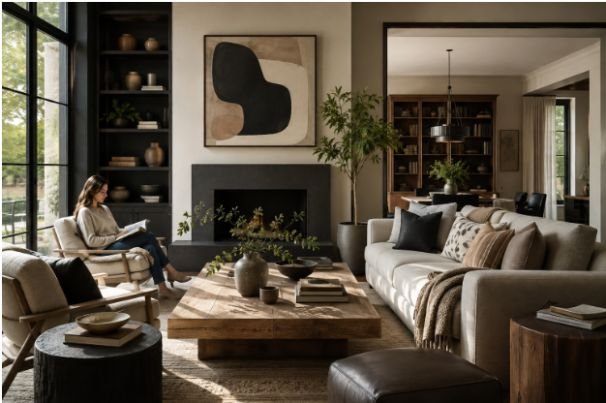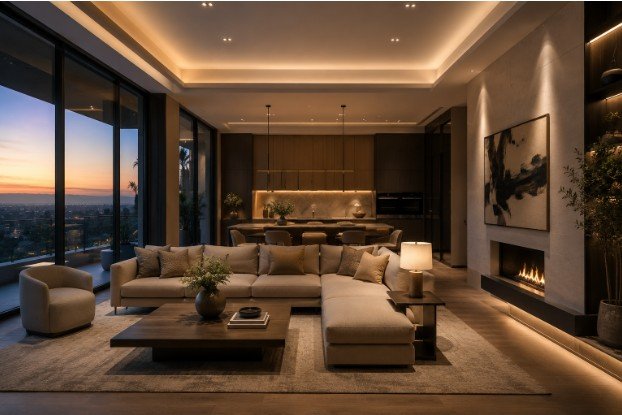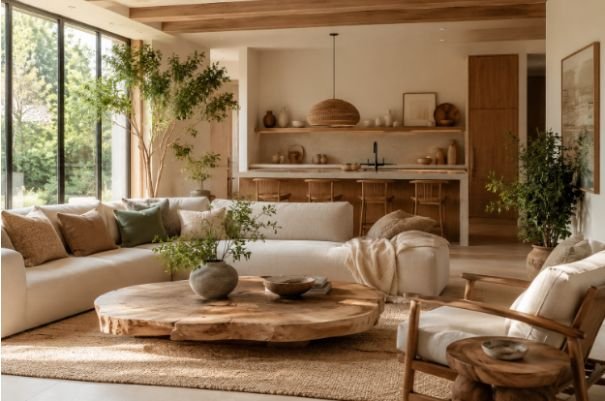
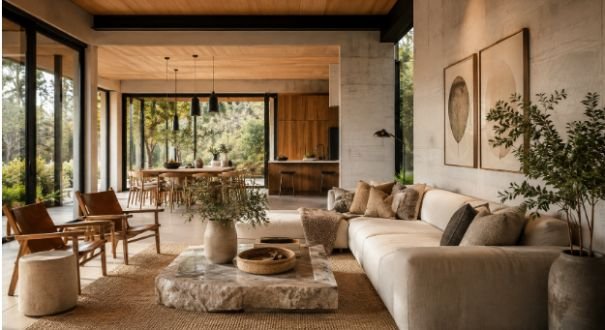
I have always found that the most inviting modern rooms are rarely the ones with the most decoration. The spaces that stay with me usually have a quieter quality: clean furniture, open surfaces, natural light, and a few materials that make you want to reach out and touch them. Wood grain, stone veining, woven fibers, and soft linen can make an otherwise simple room feel much more considered.
I also noticed that combining natural materials is less about matching everything and more about giving each material enough room to matter. A sleek room can handle rough stone, warm oak, or a woven rug when the overall composition stays restrained. That balance is what makes organic modern design feel current rather than rustic or overly decorated.
Start With a Clean Modern Foundation
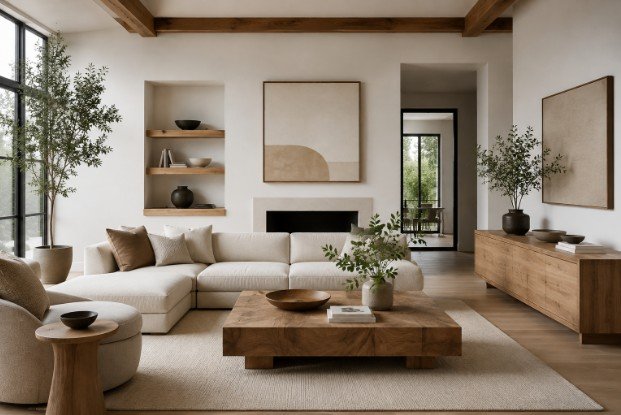
Natural materials work best when the architecture and furniture provide some visual restraint. Clean lines, simple silhouettes, open floor space, and a limited amount of decor create a backdrop where wood, stone, and natural fibers can stand out.
A neutral palette helps establish that foundation. Soft white, warm beige, muted taupe, and gentle gray allow the natural variations in wood and stone to become part of the color scheme instead of competing with it. Organic modern interiors commonly use this combination of restrained forms, neutral tones, home design trends, and natural textures to create warmth without clutter.
Think of the room as having a visual hierarchy. If the floor has strong wood grain, the furniture does not need equally dramatic finishes. If a stone fireplace has prominent veining, keep nearby accessories simple.
Choose One Material to Lead
Trying to give every natural material equal attention can quickly make a room feel chaotic. A better approach is to choose one dominant material and let the others support it.
Wood is an easy starting point. Light oak can make a contemporary room feel fresh, while walnut adds depth and a richer tone. Ash works well when you want visible grain without making the room feel heavy.
Once the main wood tone is established, bring in another material through a smaller surface. A travertine coffee table, limestone side table, or stone fireplace can introduce variation without taking over.
This creates repetition without making the room look coordinated in an obvious way.
Mix Rough and Refined Textures
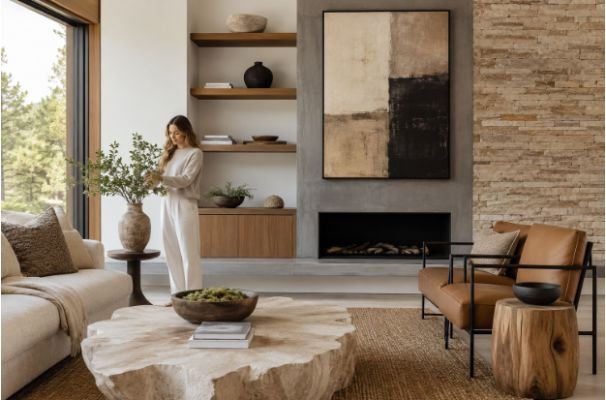
One of the easiest ways to make natural materials feel modern is to place contrasting textures next to each other.
A smooth stone surface can sit beside a loosely woven linen chair. A sleek glass table can work with a chunky wool rug. A streamlined sofa can be paired with a rough wood stool or a hand-finished ceramic vessel.
The contrast gives the eye something to move across. It also prevents a neutral room from feeling flat.
This is where texture becomes more useful than adding more color. Natural materials already have subtle variations in grain, pores, fibers, and surface irregularities. Layering those differences can create depth while keeping the palette quiet.
Let Modern Shapes Keep the Look Fresh
Natural materials can sometimes push an interior toward a traditional or rustic appearance. The easiest way to prevent that is through furniture shape.
Choose low-profile sofas, simple cabinetry, streamlined dining chairs, and tables with clean geometric bases. Then allow the material itself to provide character.
A thick oak tabletop on a simple metal base can feel contemporary. A rounded travertine table can soften a room without becoming decorative. Even natural rattan can look modern when used on a chair or cabinet with a simple silhouette.
Organic modern design works particularly well when natural forms and materials are balanced with uncomplicated furniture.
Add Tactile Details With Restraint
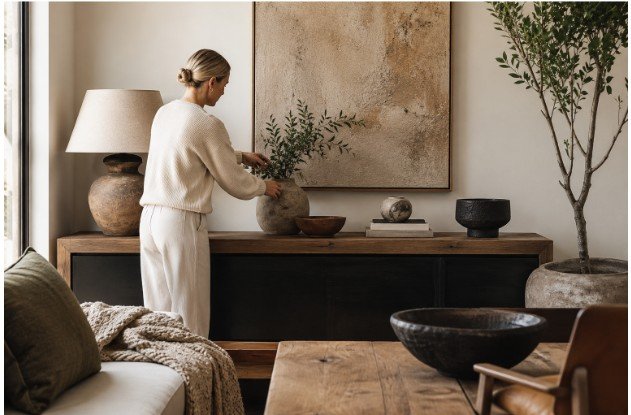
Smaller materials can make a room feel finished without filling every surface. Linen curtains, wool throws, jute rugs, leather seating, woven baskets, and handmade ceramics can introduce tactile variation.
This is also where tactile interior design trends can influence a modern space without changing its overall character. Instead of adding more objects, choose pieces that contribute something through touch, texture, or craftsmanship.
Greenery can work in the same way. One large sculptural plant often has more impact than several small plants scattered around the room. Natural greenery is frequently used in organic modern interiors because it adds color and life without requiring a busy decorative scheme.
Avoid Making Every Surface Natural
More is not necessarily better.
If the floors, walls, ceiling, furniture, lighting, and accessories all use visible natural materials, the room can lose the crisp quality that makes modern design appealing. Leave some surfaces quiet.
Modern materials such as glass, metal, painted cabinetry, or polished concrete can actually make wood, stone, and fibers feel more noticeable. The contrast gives natural materials a stronger visual presence.
The most successful combinations often include something deliberately plain. That empty visual space is what allows the textured elements to breathe.
Why Simplicity Makes Natural Materials Stand Out
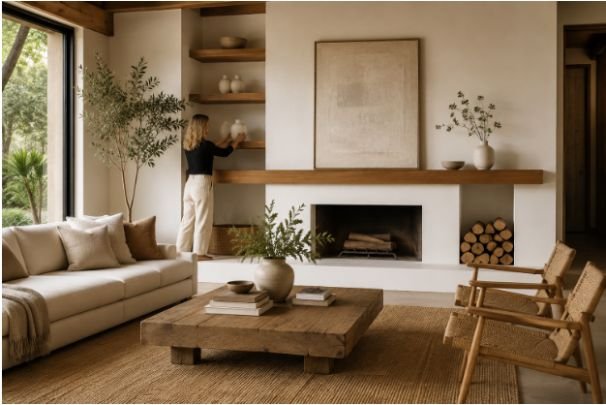
Natural materials already contain plenty of visual information. Wood has grain, stone has movement, linen has variation, and woven fibers create small shifts in light and shadow. They do not need a crowded setting to make an impression.
The strongest modern interiors use that quality with discipline. Start with a calm foundation, choose one material to lead, introduce contrasting textures, and repeat related colors throughout the room. The result can feel warm and layered while still retaining the clarity of contemporary design.
That is ultimately what makes the combination work. Nature supplies the character, while modern simplicity gives it space to be noticed.
FAQs: How to Combine Natural Materials in Modern Interiors With Modern Simplicity
What natural materials work best in modern interiors?
Wood, natural stone, linen, wool, leather, rattan, clay, and jute work especially well. Choose materials based on their texture and tone rather than trying to use all of them.
Can you mix different wood tones?
Yes. Different wood tones can work together when they share a similar undertone or appear repeatedly throughout the room. Too many unrelated finishes can make the space feel disconnected.
How do you make natural materials look modern?
Pair them with clean silhouettes, simple furniture, restrained decor, and uncluttered layouts. The contrast between organic texture and modern form keeps the room contemporary.
How many natural materials should one room have?
There is no fixed number, but three to five complementary materials are usually enough to create depth. Let one or two materials dominate and use the others as supporting details.
When Natural Texture Becomes the Design
A modern interior does not need more decoration to feel complete. Sometimes the character comes from the materials themselves: the grain of a walnut table, the uneven surface of stone, the softness of linen, or the weave of a rug. When those elements have space around them, they can create warmth without taking away from the clean structure of the room.
The result is a home that feels collected rather than decorated, and modern without feeling cold. Natural materials bring the imperfections and variation, while simplicity keeps everything grounded.