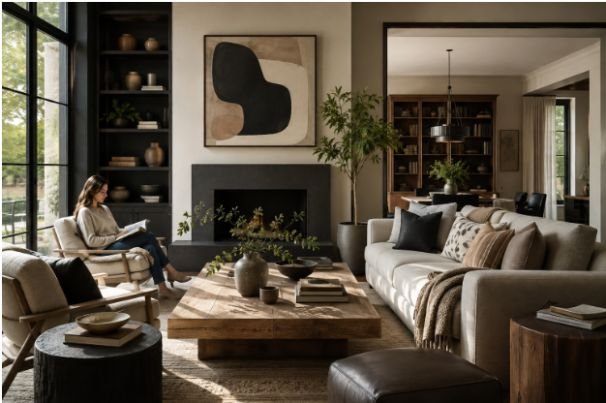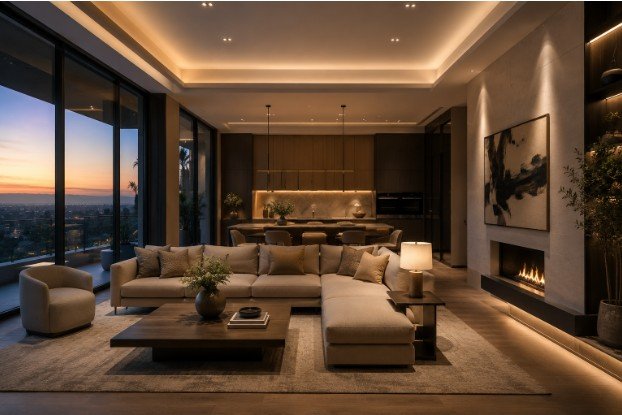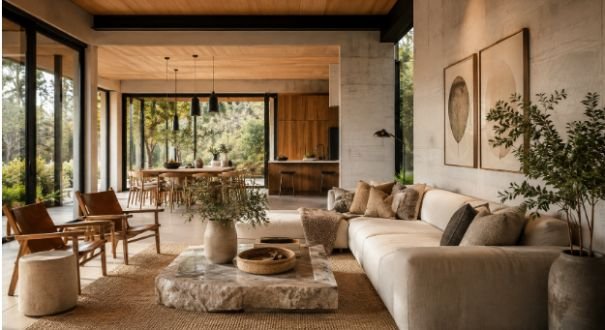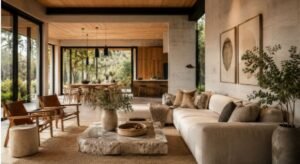
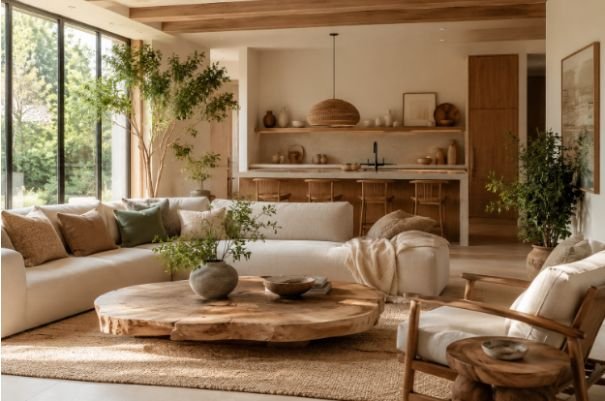
I have always noticed that the most comfortable living rooms are rarely the ones filled with the most decoration. The spaces that feel good to spend time in usually have a quieter quality, with natural textures, comfortable furniture, and enough breathing room between pieces. That balance is what makes organic modern design so appealing to me. It looks polished, but it does not feel overly arranged.
I also found that creating this look does not require replacing everything in a room. A warmer wall color, a wood coffee table, softer textiles, and a few plants can change the character of a space surprisingly quickly. The goal is not to make the room look perfectly coordinated. It is to combine modern simplicity with materials and shapes that make the space feel lived in.
Start With a Warm, Neutral Foundation
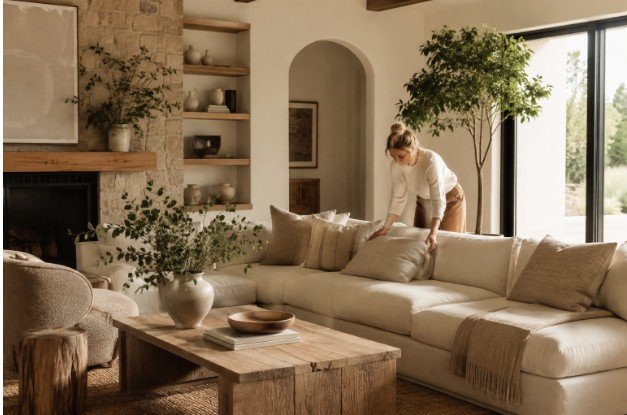
Color sets the mood before furniture or accessories have a chance to do it. Organic modern living spaces typically work best with warm whites, soft creams, beige, taupe, and other understated neutrals rather than stark white or cool gray.
That does not mean the room needs to be completely beige. Small touches of olive green, clay, muted terracotta, or warm brown can give the palette more depth without disrupting its calm character.
A useful approach is to treat the neutral shade as the backdrop and introduce earthy colors through smaller, replaceable pieces. A terracotta pillow or olive-green accent chair can add personality without making the entire room feel busy.
The trick is to create tonal variation. Several shades of cream and brown can feel much richer when they have different textures and finishes.
Let Natural Materials Do the Heavy Lifting
Natural materials are one of the easiest ways to make modern interiors feel warmer. Wood, stone, rattan, bamboo, and travertine bring visual variation that manufactured finishes often struggle to reproduce.
Wood is particularly useful because it can soften an otherwise minimal room. A walnut console, oak coffee table, or reclaimed wood accent can introduce natural grain and subtle imperfections. Those details are not flaws. They help the room feel less manufactured.
Stone can play a similar role. A travertine side table or stone-topped coffee table adds weight and texture while still fitting comfortably into a modern setting.
The important part is not using every natural material at once. Pick two or three that work together, then repeat them throughout the space. This creates continuity without making the room feel like a showroom.
Layer Textiles for More Warmth
Hard materials need softer counterparts. Linen, cotton, wool, and jute can bring that contrast through curtains, rugs, cushions, throws, and upholstery.
A linen sofa paired with a woven rug can look much more inviting than the same sofa sitting on a completely bare floor. A chunky wool throw can soften a clean-lined chair. Even a simple cotton cushion can make a structured space feel more relaxed.
Texture matters just as much as color here. Two beige pieces can look completely different when one has a smooth finish, and the other has a visibly woven surface.
This is where interior design ideas that balance comfort and elegance become especially useful. A room can remain refined while still having fabrics and surfaces that make you want to sit down and stay awhile.
Make Comfort Part of the Design
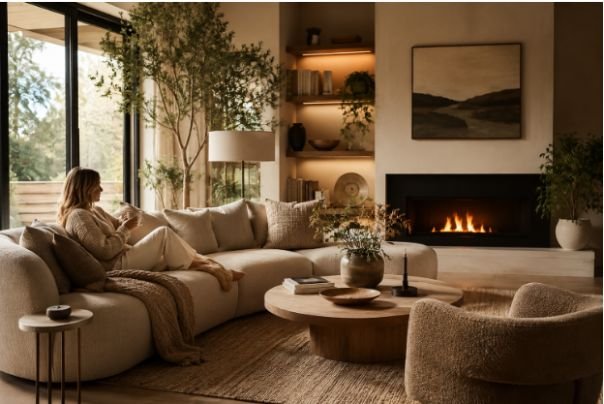
A calm room still needs to work for real life. If the sofa looks beautiful but feels uncomfortable, the design has missed the point.
Think about how the living room is actually used. If people regularly watch movies, read, work on laptops, or entertain guests, furniture placement should support those activities.
Leave enough space to move around easily. Keep frequently used surfaces within reach. Choose upholstery that suits your household. Add a rug large enough to visually connect the main seating area rather than leaving every piece floating independently.
Organic modern design is at its best when simplicity supports everyday living instead of restricting it.
Mistakes That Can Make Organic Modern Spaces Feel Flat
One common mistake is relying too heavily on beige. Without contrast, even an expensive room can look washed out. Add darker wood, black accents, muted greens, or natural stone to create definition.
Another mistake is buying every piece from the same collection. Matching furniture may seem easy, but slight differences in material, shape, and age usually create a more authentic interior.
It is also easy to overdo the “organic” side. Too much rattan, reclaimed wood, woven decor, or rustic detailing can push the room away from modern design. The cleaner architectural elements should remain visible.
Finally, avoid decorating every empty corner. Negative space is part of the style. A little emptiness allows the materials and furniture you chose to have more impact.
FAQs: How to Create an Organic Modern Living Space That Feels Calm and Inviting
What colors work best in an organic modern living room?
Warm white, cream, beige, taupe, soft brown, and muted earth tones work well. Olive, clay, and terracotta can add controlled color without overwhelming the room.
What materials are commonly used in organic modern design?
Wood, stone, travertine, linen, cotton, wool, jute, rattan, and leather are popular choices. Combining different textures creates warmth while maintaining a clean appearance.
Can organic modern design work in a small living room?
Yes. Use fewer, better-scaled pieces, keep pathways clear, and choose furniture with lighter visual profiles. Mirrors and natural light can also help the room feel more open.
Does organic modern design have to be minimalist?
Not strictly. The style benefits from restraint, but comfort and personality still matter. A few meaningful objects, layered textiles, and natural imperfections can keep the room from feeling sterile.
Why a Calm Room Doesn’t Need to Feel Empty
The strongest organic modern living spaces are not defined by how little they contain. They are defined by how deliberately everything works together. Natural materials bring character, soft textures make clean furniture more inviting, and restrained colors give the eye somewhere to rest. When those elements are balanced, the room can feel sophisticated without becoming formal or precious.
That is ultimately what makes the style practical. It leaves room for real life while keeping the visual environment calm. A comfortable sofa, a worn wood surface, sunlight across a textured rug, and a plant that has grown into its space can create more lasting appeal than a room designed around whatever happens to be trending.