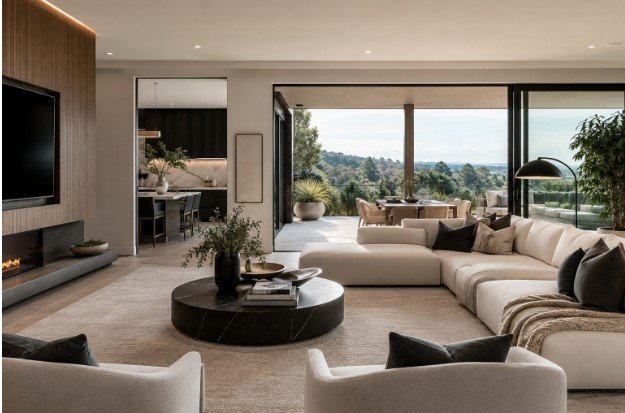
I have always noticed that the most impressive homes are not necessarily the ones filled with the biggest chandeliers, glossy finishes, or expensive-looking furniture. The spaces that stay with me tend to feel calmer. Natural light moves easily through them, materials feel good under the hand, and every piece seems to have a reason for being there.
I also find that luxury interiors are becoming less interested in showing how much was spent and more interested in how a home feels to live in. That shift has made modern luxury interior design warmer, more personal, and much easier to connect with. Instead of filling every corner, designers are using proportion, texture, craftsmanship, and comfort to create a sense of sophistication that does not need to announce itself.
Modern Luxury Starts With the Space Itself
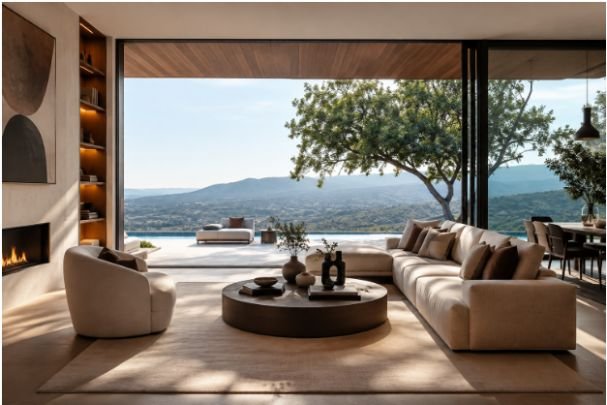
Luxury begins before furniture or accessories enter the room. Good proportions, natural light, clean sightlines, and thoughtful circulation can make a home feel considered from the moment you walk through the door.
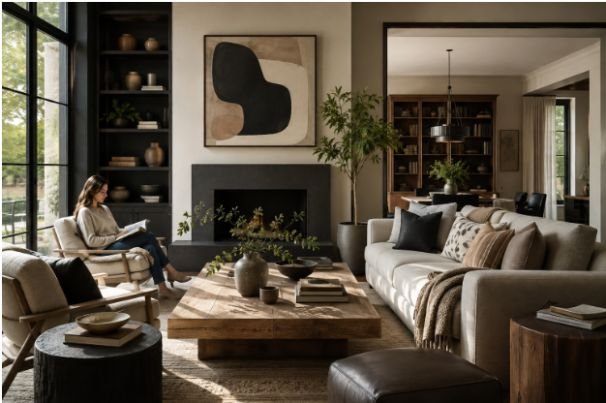
That is one reason the rigid open-concept layout is evolving. Large connected spaces still have their place, but many contemporary homes now create softer zones within them. A living room might include a quiet reading chair near a window, a conversation area around a low table, or a small work corner that feels visually separate without needing a wall.
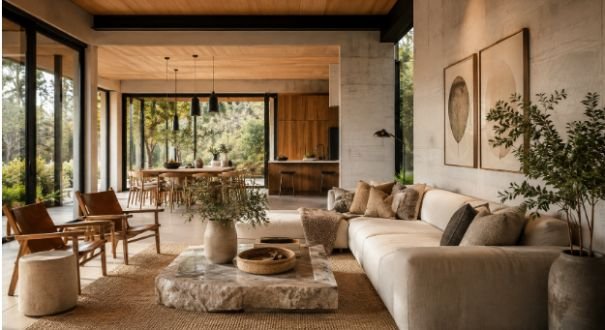
This approach makes a home feel more useful. Instead of designing one impressive room, the focus shifts toward how people actually move, relax, entertain, and spend time there. These principles are especially valuable when exploring Indoor-Outdoor Living Ideas for Luxury Homes, where seamless transitions between interior and exterior spaces can improve both comfort and everyday functionality.
Warm Materials Are Replacing Surface-Level Opulence
Material selection has become one of the clearest ways to create luxury without visual excess. Hand-finished plaster, natural stone, solid wood, linen, leather, and unlacquered metals bring depth that manufactured shine often cannot replicate.
Wood is also becoming richer and warmer. Walnut, smoked oak, and other deeper tones can give a room a sense of permanence, particularly when paired with softer upholstery and natural stone.
The appeal is not simply how these materials look when they are new. Good materials develop character. Leather gains patina, wood changes subtly with age, and natural stone carries variations that make each surface feel individual.
That creates a more authentic kind of luxury. The room does not need everything to match perfectly because the materials themselves provide visual interest.
Let Texture Do More of the Decorating
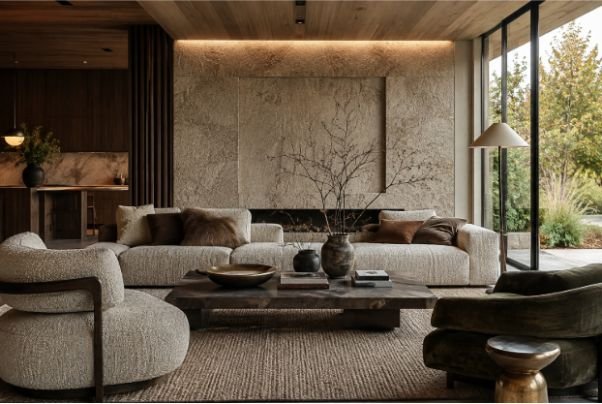
A neutral room can easily become flat if every surface has the same finish. Modern luxury avoids that problem by layering textures instead of relying on lots of decoration.
A smooth stone coffee table might sit beside a textured wool sofa. A plaster wall can provide a soft matte background for polished metal lighting. Linen curtains can soften the harder lines of architectural elements.
This kind of contrast gives the eye something to explore without making the room feel busy. It is also one reason contemporary luxury interiors often feel comfortable rather than formal.
The goal is not to collect as many finishes as possible. A smaller selection of well-chosen materials usually creates a stronger result.
Technology Should Work Quietly in the Background
Smart-home technology is becoming part of luxury living, but the most successful installations do not look like technology displays.
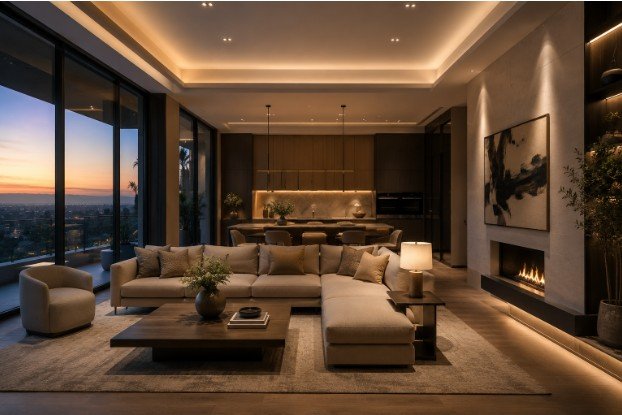
Integrated lighting controls, automated shades, climate systems, hidden speakers, and discreet entertainment systems can make daily routines easier while preserving clean sightlines.
This idea of invisible technology fits naturally with modern luxury interior design because convenience becomes part of the experience rather than another visual feature. The room remains calm while the technology handles the small tasks behind the scenes.
Personal Details Keep Luxury From Feeling Generic
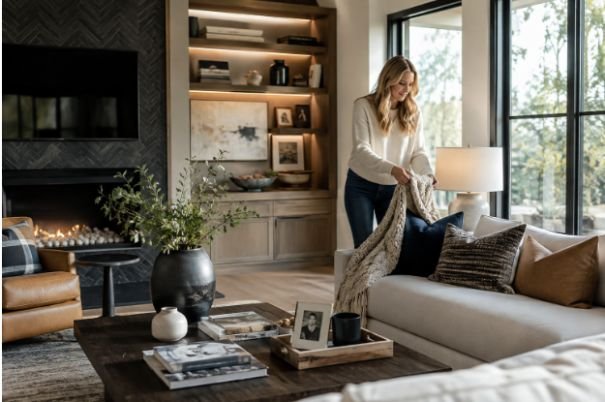
A perfectly coordinated room can still feel strangely impersonal. The strongest luxury interiors leave room for personality.
That might come through a piece of art collected during a trip, a vintage chair, handmade ceramics, family photographs, or a custom piece of furniture. Plants can also soften architectural lines and create a stronger connection with the outdoors.
This is where restraint matters. A few meaningful pieces usually have more impact than shelves filled with decorative objects.
Curating a room means knowing when to stop. Negative space gives important objects room to breathe and prevents the design from becoming visually exhausting.
Why Modern Luxury Feels More Livable
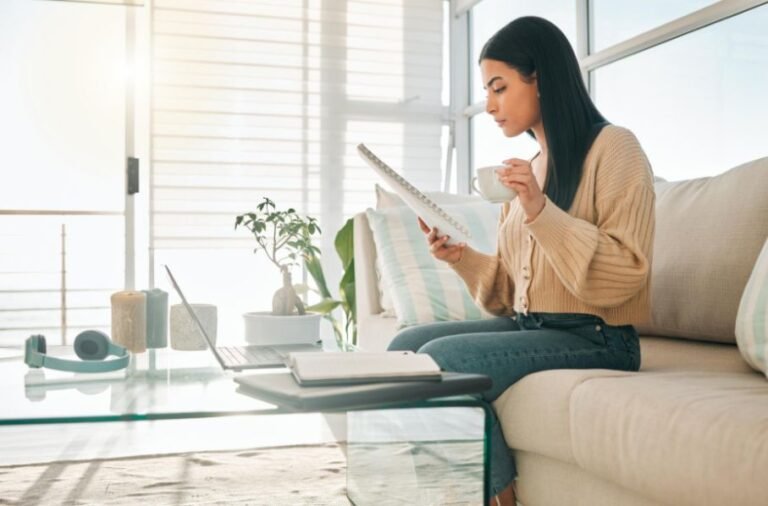
The biggest change in luxury interiors may be the growing emphasis on everyday comfort. A sophisticated home no longer needs to feel formal or untouched. It can have beautiful materials and still accommodate pets, children, work, entertaining, quiet mornings, and messy real life.
That makes luxury less about appearance alone and more about the quality of the experience. Good design anticipates how a space will be used, where clutter will go, how light will change, and what will make people want to stay.
FAQs: How Modern Luxury Interior Design Is Redefining Sophisticated Homes
What defines modern luxury interior design?
It combines strong architecture, quality materials, thoughtful proportions, layered lighting, comfortable furniture, and restrained decoration. The emphasis is on craftsmanship and experience rather than visible extravagance.
Is modern luxury interior design minimalist?
Not necessarily. It often shares minimalism’s preference for clean lines and restraint, but modern luxury usually adds more texture, richer materials, warmth, and personal details.
Which materials work well in a luxury interior?
Natural stone, walnut, smoked oak, linen, leather, plaster, and aged or unlacquered metals work particularly well. Their texture and ability to develop character add depth.
How can a luxury home still feel comfortable?
Choose furniture based on both appearance and use, create defined zones, layer warm lighting, and leave enough open space for easy movement. Luxury should support daily living, not restrict it.
When Luxury Becomes a Feeling, Not a Display
The most lasting version of modern luxury is not necessarily the one that looks expensive in photographs. It is the home where proportions feel right, materials become more beautiful with age, technology quietly removes friction, and personal objects make the space feel unmistakably yours. That combination creates sophistication without relying on excess.
Luxury becomes much more meaningful when it improves the way a home is experienced. The room can be impressive, but it should also make you want to sit down, stay awhile, and feel completely at home.