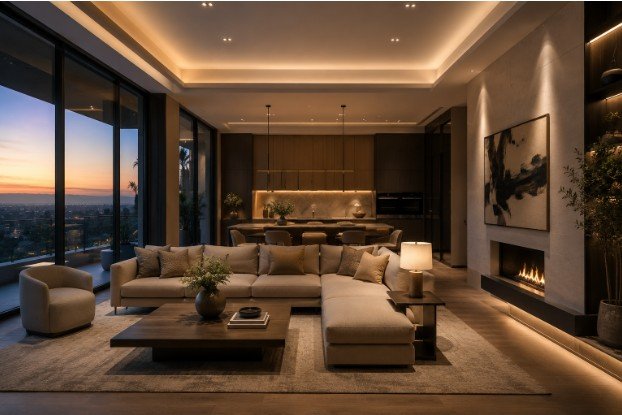
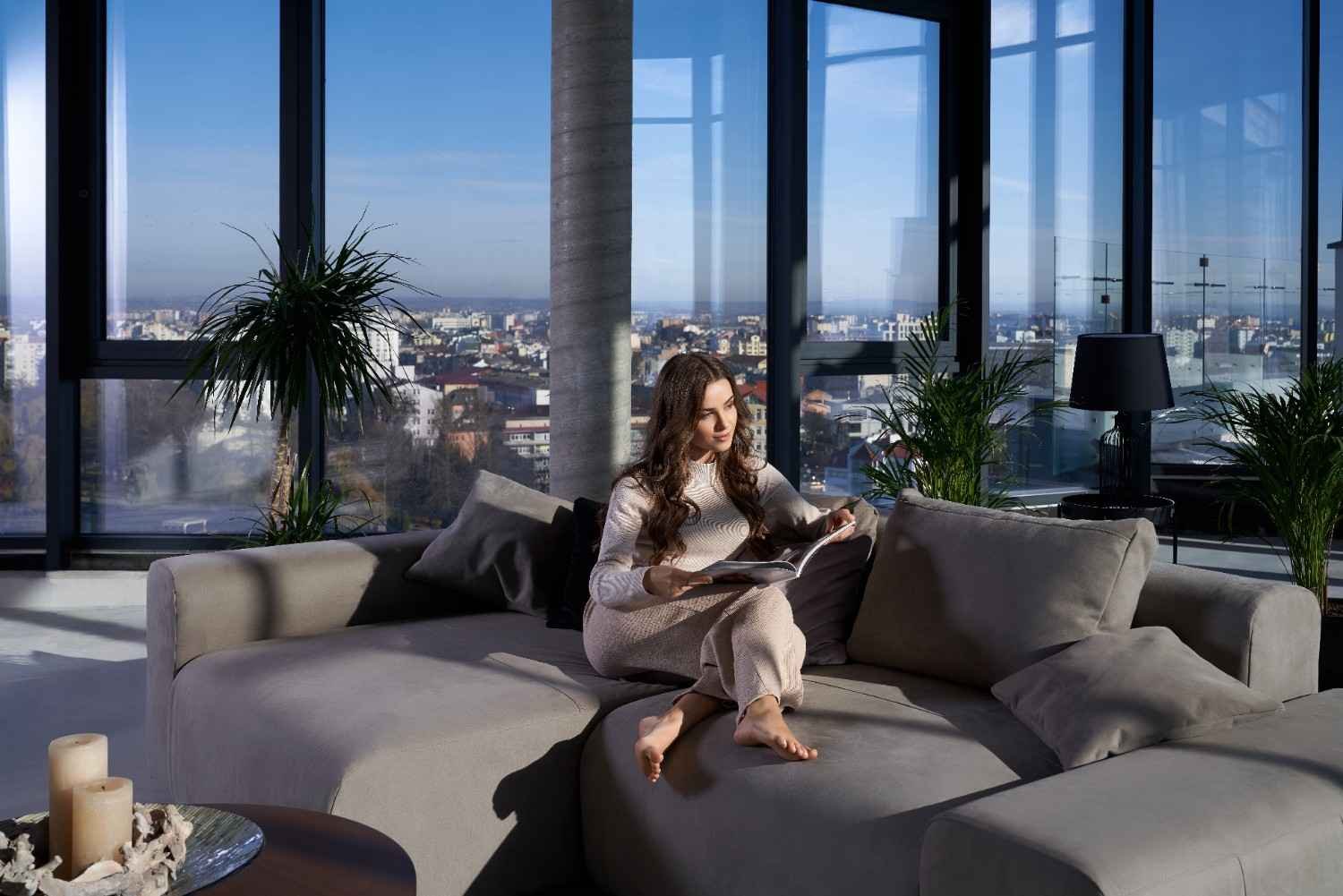
Luxury is changing. I no longer see a high-end home as one defined only by square footage and dramatic amenities. The best energy-efficient features in luxury homes make comfort feel effortless while reducing waste, improving indoor air quality, and helping a large property perform intelligently.
In the United States, an estate may include multiple HVAC zones, walls of glass, heated floors, pools, guest wings, landscape lighting, and EV charging. I prefer treating the property as one high-performance system rather than adding a collection of “green” gadgets after construction.
What Energy-Efficient Features Matter Most in a Luxury Home?
The biggest gains usually begin with the building envelope. I would prioritize insulation, airtightness, thermal-bridge control, high-performance glazing, and climate-responsive design first. These improvements can also rank among the best luxury home features for resale value, since efficiency, comfort, and lower operating costs often appeal to future buyers.
ENERGY STAR estimates that air sealing and added insulation can save the average US homeowner about 15% on heating and cooling costs. A stronger envelope can also reduce drafts, noise, temperature swings, and HVAC demand.
How Do Advanced Insulation and Airtight Construction Improve Comfort?
High-performance homes may combine continuous insulation, sealed sheathing, and detailed transitions around windows, doors, roofs, and foundations. Some custom builds use ZIP System sheathing with closed-cell spray foam, while others use climate-specific assemblies.
The goal is to limit air leakage and thermal bridging. I would also request blower-door testing to measure actual airtightness rather than assuming an expensive house automatically has an efficient shell.
Are Triple-Glazed Windows and Ventilated Facades Worth It?

Oversized glazing can become a major energy weak point. Double- or triple-glazed windows with Low-E coatings, insulated spacers, and thermally broken frames reduce heat transfer while preserving daylight and architectural views. The Department of Energy notes that Low-E coatings can reduce window energy loss substantially.
Ventilated rainscreen facades with porcelain, stone, or similar premium cladding can also create a cavity that helps manage heat and moisture. For architect-designed luxury homes, this approach can improve performance without sacrificing an upscale exterior.
Which HVAC Systems Make Large Luxury Homes More Efficient?
I would look beyond one oversized HVAC system. Heat pumps, geothermal heating and cooling, smart zoning, hydronic radiant floors, and energy-recovery ventilation can work together to deliver quiet, precise comfort.
Ground-source heat pumps use relatively stable underground temperatures. Advanced geothermal designs can also support hot water or return recovered thermal energy to the ground loop or redirect it toward swimming pools. The Department of Energy identifies ground-source systems as a highly efficient year-round heating and cooling option.
Why Do Zoning, Radiant Floors, and ERV Systems Work So Well?
A large estate should not condition every room identically. Zoned HVAC lets owners manage bedrooms, guest wings, offices, theaters, and entertainment spaces independently.
Hydronic radiant floors work particularly well beneath marble, stone, and tile because they distribute warmth evenly without relying as heavily on forced-air delivery. An ERV or HRV complements an airtight home by supplying controlled fresh air while recovering part of the energy in outgoing air.
Can Solar Panels and Battery Storage Make a Luxury Home More Resilient?

Solar panels for luxury homes no longer need to dominate the architecture. Low-profile arrays, microinverters, and integrated photovoltaic roof products can preserve clean rooflines while generating electricity.
Pairing solar with home battery storage allows homeowners to shift stored energy to later hours and can provide backup power during outages when the system is configured correctly. The Department of Energy explains that ordinary grid-connected solar alone generally cannot power a home during an outage; compatible inverter controls and storage are required.
Net-zero luxury homes take the concept further. Passive solar design, thoughtful building orientation, daylighting, exterior shading, efficient systems, renewable generation, and battery storage can work together to reduce or offset annual energy demand.
US homeowners should also be careful with outdated incentive information. As of 2026, the IRS states that the federal Residential Clean Energy Credit is not available for expenditures after December 31, 2025. I would verify current state, local, and utility incentives before calculating project ROI.
How Does Smart Home Energy Management Cut Waste?
Modern smart home energy management should do far more than control lights from an app. Predictive climate systems can learn occupancy patterns, coordinate HVAC zones, and react to weather conditions.
Automated shades can reduce unwanted afternoon solar gain during summer and admit useful sunlight during colder months. Whole-home low-voltage LED lighting, motion sensors, smart thermostats, energy monitoring, automated pool equipment, and scheduled EV charging can reduce unnecessary consumption.
To me, the best AI-driven automation feels almost invisible. The homeowner experiences consistent comfort while the technology quietly handles the energy decisions.
How Can Luxury Homes Save Energy and Water Together?
Large homes can consume substantial hot water. Heat pump water heaters, high-capacity tankless systems, insulated hot-water lines, and efficient recirculation can reduce unnecessary energy use across multiple bathrooms, kitchens, and guest suites.
Graywater recycling adds another layer of resource efficiency. Dual-plumbing systems can collect suitable water from showers, bathroom sinks, and laundry for approved reuse, such as landscape irrigation. EPA guidance notes that graywater rules vary by state and locality, making local code review essential.
Smart irrigation controllers, native or climate-appropriate landscaping, variable-speed pool pumps, insulated pool covers, and optimized pool heating can further reduce the utility demands created by luxury outdoor spaces.
Which Green Certifications Should Luxury Buyers Look For?
Words such as “eco-luxury” and “sustainable luxury homes” sound impressive, but I prefer measurable proof.
ENERGY STAR certification, LEED residential certification, HERS ratings, Passive House or Phius standards, documented energy modeling, and blower-door results can provide stronger evidence that a high-performance luxury home actually delivers what its marketing promises.
ENERGY STAR says NextGen certified homes are, on average, at least 20% more energy efficient than homes built to typical code levels and incorporate technologies including heat pumps, heat pump water heaters, electric cooking, and EV charging.
LEED residential projects also undergo verification, while the HERS Index provides a nationally recognized method for rating home energy performance. Phius standards add performance-based requirements covering airtightness, heating and cooling loads, and overall energy use.
Do Energy-Efficient Upgrades Increase Luxury Home Value?
There is no universal dollar-for-dollar return, but lower luxury home operating costs can strengthen buyer appeal. Efficient envelopes, quieter HVAC, healthier ventilation, solar-plus-storage resilience, and sophisticated automation can make ownership considerably easier.
When I evaluate energy efficient features in luxury homes, I look for systems that improve comfort first and savings second. The real upgrade is a residence that holds temperature better, manages resources intelligently, handles outages more effectively, and requires less manual attention.
Frequently Asked Questions (FAQs)
1. What should I check when buying an energy-efficient luxury home?
Review utility history, HVAC specifications, window ratings, insulation, blower-door results, energy modeling, solar data, battery capacity, and third-party certifications.
2. Is geothermal heating worth considering for a luxury estate?
Yes, when site conditions, heating and cooling loads, and long-term ownership plans justify the higher installation cost.
3. Can a large luxury home realistically reach net-zero energy?
Yes. Reduce energy demand first, then pair efficient systems with enough renewable generation to offset annual consumption.
4. Are smart thermostats enough to make a luxury home energy efficient?
No. The building envelope, HVAC design, ventilation, water heating, glazing, and whole-home controls determine overall performance.
The New Luxury Is Performance You Barely Notice
The strongest high-performance homes follow a simple sequence: reduce demand through the envelope, install efficient mechanical systems, control them intelligently, recover energy and water where practical, and then add renewable generation and storage.
That is the version of sustainable luxury I find most convincing. A luxury home should still feel expansive, beautiful, quiet, and effortless. It simply achieves that experience with far less waste.