I used to think “mansion” was simply another word for an extremely luxurious house. Once you compare actual high-end properties, that definition quickly falls apart.
The most useful way to understand luxury home vs mansion differences is simple: luxury describes the quality and desirability of a property, while mansion describes exceptional residential scale.
A smaller penthouse in Manhattan can qualify as luxury. A 7,000-square-foot suburban property may qualify as a mansion without offering the same level of craftsmanship, location, or exclusivity.
That distinction matters when comparing value, lifestyle, and long-term ownership costs.
Luxury Home vs Mansion: The Short Answer
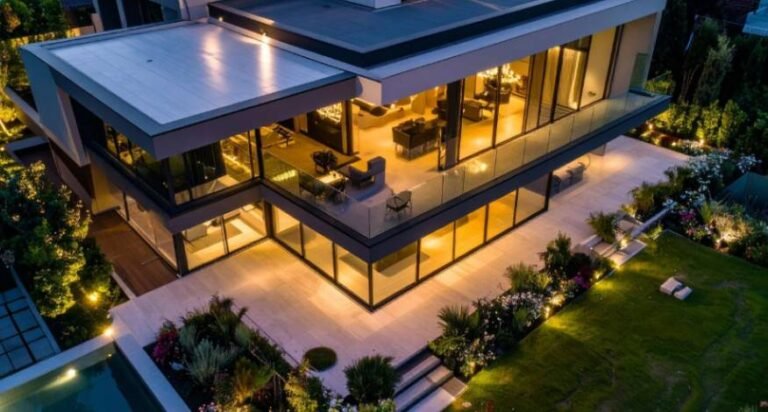
A luxury home earns its status through premium design, sought-after location, privacy, craftsmanship, technology, and lifestyle amenities.
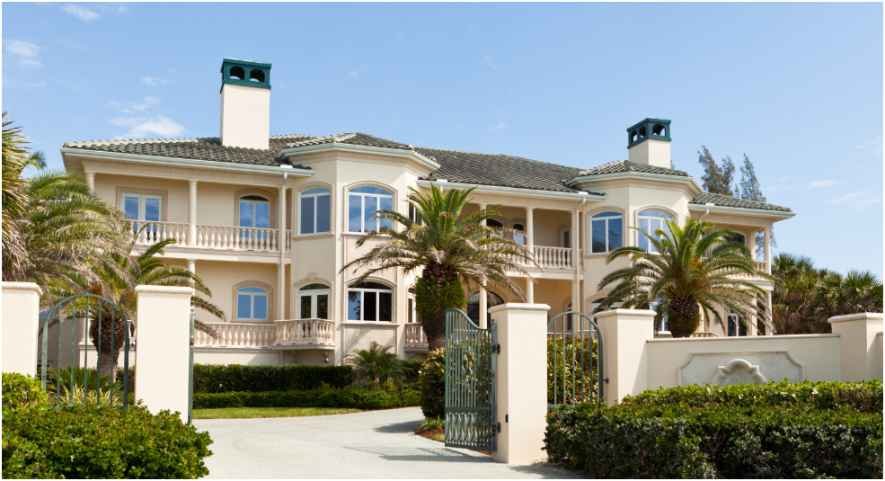
A mansion is primarily distinguished by its size, room count, imposing architecture, and ability to accommodate large-scale living or entertaining.
This means the categories can overlap.
A mansion can also be a luxury home when it combines immense scale with exceptional materials and amenities. However, a property does not need mansion-sized proportions to sit at the top of its local real estate market.
Recent Realtor.com research illustrates this point. Its 2025 analysis treated the top 10% of home prices in each market as a useful luxury benchmark. The national threshold was just under $1.3 million, but luxury pricing varied substantially by location.
Size Is the Clearest Mansion Difference
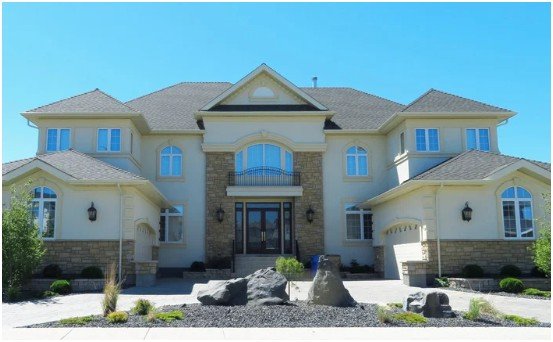
Square footage creates one of the most obvious luxury home vs mansion differences.
Luxury has no meaningful minimum size. Buyers can find luxury condominiums, penthouses, townhouses, villas, and detached houses.
Mansions occupy a much narrower physical category.
How Many Square Feet Qualifies as a Mansion?
There is no official US legal size requirement for calling a house a mansion. In real estate usage, however, about 5,000 square feet is often treated as the lower boundary. Some professionals reserve the term for homes exceeding 8,000 square feet.
Context still matters.
A 5,500-square-foot property may seem enormous in an expensive urban market. The same home may appear relatively modest among sprawling estates in Beverly Hills or affluent Texas suburbs.
Mansions also tend to carry more bedrooms, bathrooms, entertaining areas, and specialized rooms. Five or six bedrooms are common, although room count alone does not determine mansion status.
What Actually Makes a Home Luxury?
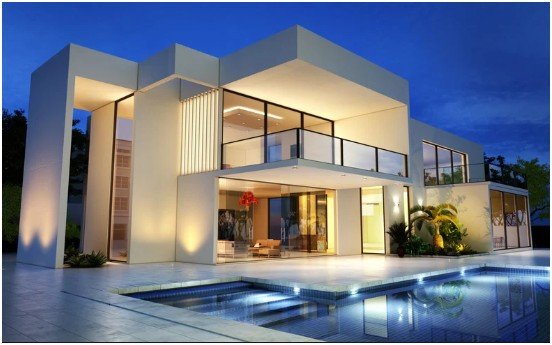
Luxury real estate works differently because size alone cannot establish quality.
When I compare high-end listings, I look first at what cannot easily be added later: location, privacy, views, architecture, lot position, and construction quality.
Location Can Matter More Than Square Footage
A waterfront residence in Miami, ski property in Aspen, Manhattan penthouse, or secluded home in Malibu can command luxury status without approaching mansion proportions.
This is why luxury home vs mansion differences become especially obvious in expensive US markets.
Scarce locations create value that extra bedrooms cannot reproduce.
Luxury also changes relative to the local market. A property considered exceptional in one metro may sit closer to the middle of another high-end market.
Materials, Technology, and Custom Design
True luxury homes typically put more emphasis on execution than sheer size.
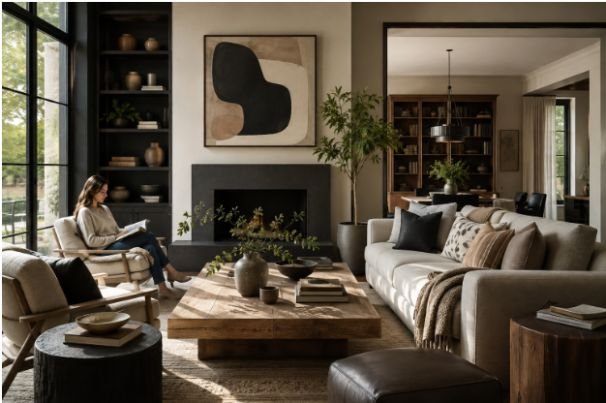
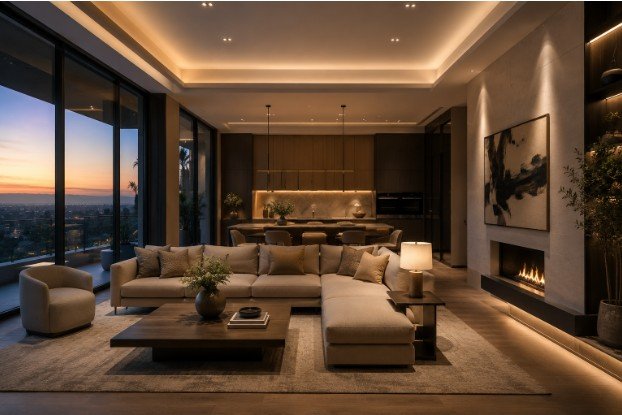
That can include custom millwork, natural stone, architectural lighting, professional-grade kitchens, spa bathrooms, integrated security, climate automation, motorized shades, whole-home audio, and carefully designed outdoor areas.
Current luxury-market reporting also points toward resilience, privacy, wellness, and long-term usability becoming stronger markers of high-end value rather than conspicuous size alone.
Luxury Home vs Mansion Features Compared
A quick comparison makes the distinction easier to see.
| Feature | Luxury Home | Mansion |
| Defining characteristic | Quality and exclusivity | Exceptional scale |
| Typical size | No fixed minimum | Often 5,000–8,000+ sq. ft. |
| Location | Usually a major value driver | Important, but scale remains central |
| Materials | Premium or bespoke | Can range from premium to conventional |
| Technology | Advanced automation is common | Often included in modern mansions |
| Rooms | Highly refined everyday spaces | Numerous rooms and specialized spaces |
| Outdoor areas | Designed around lifestyle and setting | Often extensive grounds |
| Maintenance | High but varies greatly | Usually substantial due to size |
The biggest luxury home vs mansion differences therefore appear in what buyers are paying for. One buyer pays for scarcity and refinement. Another may be paying heavily for land, square footage, and room capacity.
Mansion Amenities Are Designed Around Scale
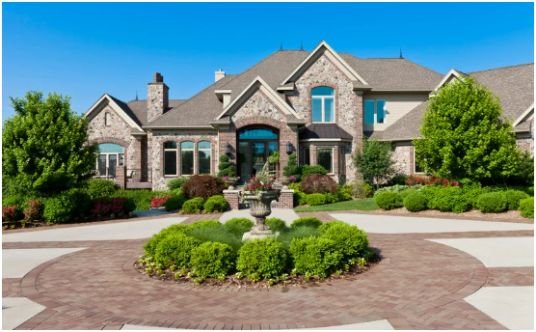
Mansions traditionally include spaces that ordinary luxury residences cannot easily accommodate.
Think ballrooms, libraries, indoor pools, large wine cellars, private theaters, billiard rooms, staff quarters, multiple kitchens, guest wings, gyms, and oversized garages.
Modern mansions may replace the formal ballroom with an indoor basketball court, wellness suite, golf simulator, recording studio, or entertainment lounge.
Their architecture also tends to emphasize presence. Grand staircases, double-height foyers, long driveways, dramatic façades, expansive lawns, and soaring ceilings help create the sense of grandeur associated with mansion living.
Luxury homes may contain many of the same features, but they do not require them.
Purchase Price Does Not Tell the Whole Story
Price is one of the most misunderstood luxury home vs mansion differences.
A mansion is not automatically more expensive than every smaller luxury property.
Consider a hypothetical comparison.
A 7,000-square-foot mansion outside a lower-cost metro could be priced below a 2,500-square-foot ocean-view property in Southern California.
The mansion offers almost three times the interior space, yet the smaller property may command a premium because its land, view, architecture, and location are harder to replicate.
That is why I would never use price or square footage alone to decide whether a property represents true luxury.
Maintenance and Ownership Costs Can Be Dramatically Different
The larger footprint of a mansion creates costs that buyers sometimes underestimate.
More square footage means more heating and cooling. Larger roofs cost more to repair. Extensive landscaping requires ongoing care. Pools, elevators, gates, fountains, guest houses, security systems, and multiple HVAC zones all add maintenance obligations.
Staffing can become another expense for exceptionally large estates.
A luxury home may also be expensive to maintain, especially if it contains sophisticated technology or custom materials. However, a smaller luxury residence can deliver a premium lifestyle without carrying the operating burden of an enormous estate.
Before purchasing either type, I would work through a luxury home due diligence checklist and examine systems, insurance, utilities, property taxes, maintenance contracts, HOA obligations, and upcoming capital repairs.
My Quality-versus-Scale Test for Comparing Properties
I find the easiest way to understand luxury home vs mansion differences is to score a property on two separate axes: quality and scale.
First, ask how difficult the property’s qualities would be to reproduce. Consider the address, view, land position, architectural pedigree, materials, privacy, and craftsmanship.
Then evaluate scale. Look at total living area, number of bedroom suites, entertaining capacity, grounds, garages, guest accommodations, and purpose-built rooms.
A property scoring high on quality but moderate on scale is a luxury home.
A property scoring extremely high on scale may be a mansion.
A property scoring exceptionally high on both is where the categories truly meet: a luxury mansion or trophy estate.
That two-axis approach is more useful than relying on whatever label appears in a listing description.
Which Is Better: A Luxury Home or a Mansion?
Neither category is automatically better.
A luxury home often suits buyers who value premium finishes, convenience, coveted locations, smart technology, and carefully designed spaces.
A mansion makes more sense when privacy, extensive grounds, large-scale entertaining, guest accommodation, or specialized leisure rooms matter more.
For investment-minded buyers, I would pay particular attention to location and future buyer demand. Extra square footage has value, but maintaining space that future buyers do not need can become expensive.
Understanding those luxury home vs mansion differences helps separate impressive listing language from features that genuinely support your lifestyle and property value.
FAQs
1. What is the main difference between a luxury home and a mansion?
A luxury home is defined mainly by quality, exclusivity, location, and amenities, while a mansion is primarily distinguished by exceptional size and scale.
2. How big does a house need to be considered a mansion?
There is no official national rule, but US real estate sources commonly use approximately 5,000 to 8,000 square feet as a practical benchmark.
3. Can a mansion not be considered a luxury home?
Yes. A very large property can lack the premium location, craftsmanship, design, condition, or amenities expected from true luxury real estate.
4. Why do luxury home vs mansion differences matter to buyers?
They help buyers judge whether the asking price reflects desirable quality and scarcity or simply a larger amount of square footage.
The Bigger House Does Not Always Win
After comparing high-end properties, I would choose substance over labels every time.
A mansion can deliver extraordinary space and presence. A luxury home can offer something harder to measure: an irreplaceable location, impeccable craftsmanship, better technology, stronger privacy, and a lifestyle that feels effortless rather than oversized.
So, ignore the grand language in the listing for a moment. Examine what you are actually buying. Measure quality separately from size, calculate the ongoing ownership burden, and investigate the property carefully before deciding which version of luxury deserves your money.