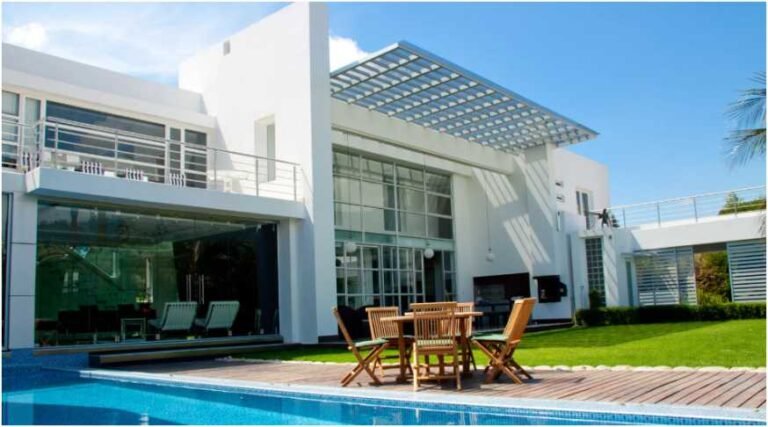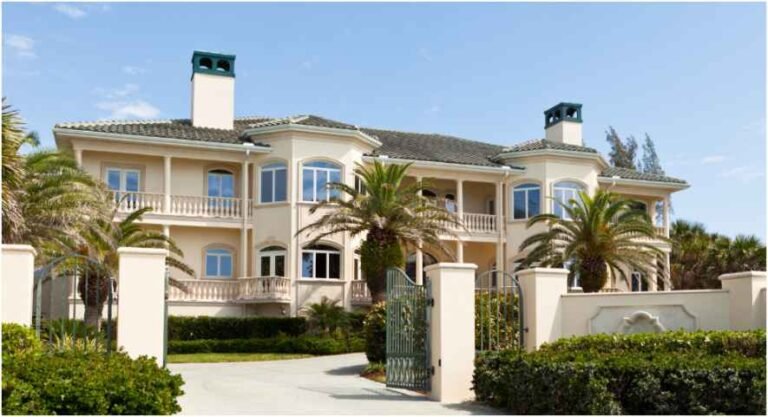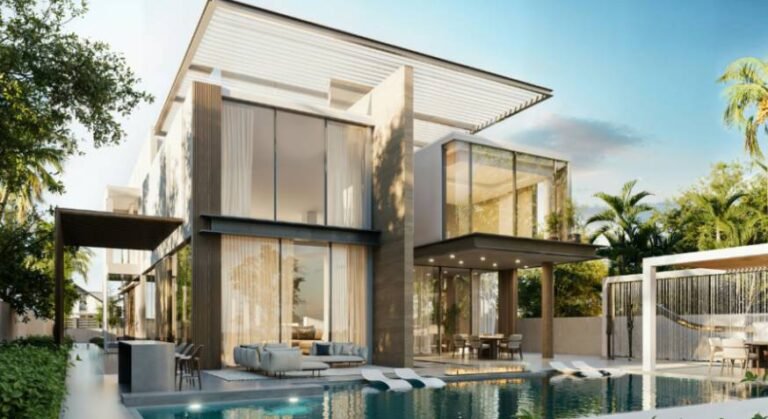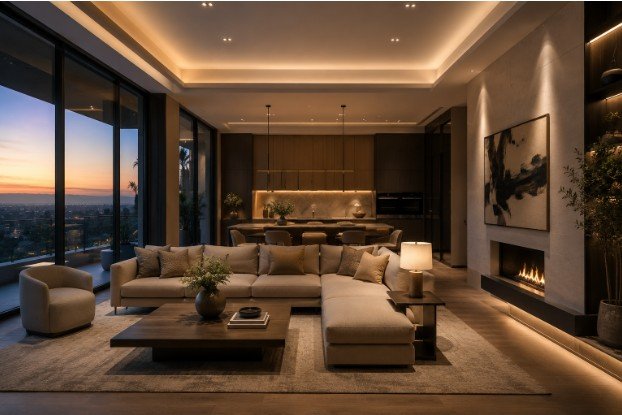
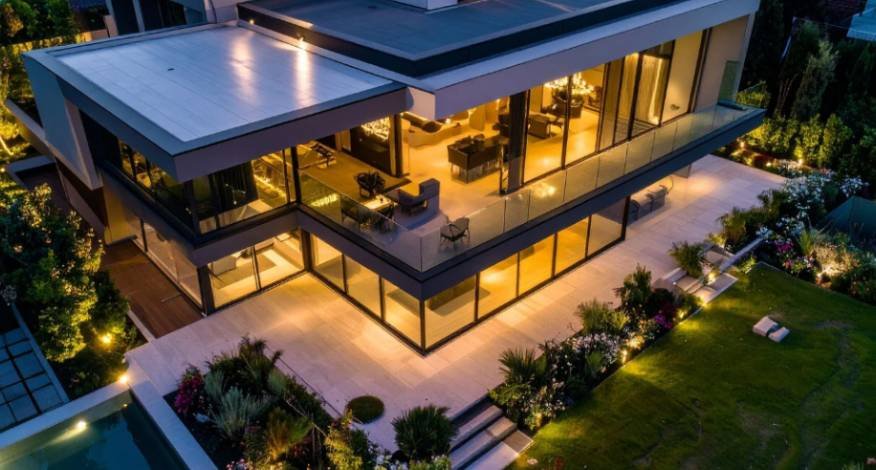
A stunning view, dramatic architecture, and a resort-style pool can make it surprisingly easy to overlook expensive problems. Some of the worst luxury home buying mistakes to avoid happen when buyers evaluate the lifestyle first and the property second.
I prefer to treat a high-end home as both a residence and a complex operating asset. The purchase price matters, but so do the systems behind the walls, future development nearby, insurance exposure, annual upkeep, and the property’s eventual resale market.
1. Buying the Lifestyle Instead of the Property
Luxury listings are designed to create emotion. Staging, sunset photography, curated landscaping, and dramatic lighting can make a property feel nearly flawless.
I would never let those features replace basic due diligence.
Walk through the property during daylight. Look at traffic, neighboring lots, noise, drainage, access roads, privacy, and room proportions without relying on listing photography.
It also helps to understand what makes a home a luxury property before paying a premium. True value usually comes from location, scarcity, construction quality, privacy, architecture, land, and amenities that remain desirable over time.
It also helps to understand what makes a home a luxury property before paying a premium. True value usually comes from location, scarcity, construction quality, privacy, architecture, land, and amenities that remain desirable over time.
2. Underestimating the True Cost of Ownership

One of the biggest luxury home buying mistakes to avoid is deciding affordability from the mortgage payment alone.
The Consumer Financial Protection Bureau reminds buyers that ownership costs can include property taxes, homeowners insurance, supplementary insurance, HOA fees, maintenance, repairs, and improvements.
Build a Maintenance Reserve
A common planning approach is reserving roughly 1% to 2% of the property’s value annually for maintenance. I treat that as a stress-test figure rather than a universal rule.
Consider a $4 million property. Even a 1% planning reserve equals $40,000 per year before property taxes, insurance, utilities, landscaping, pool care, staff, HOA dues, or major replacements.
A newer condominium may require less direct maintenance. A large estate with mature landscaping, elevators, generators, elaborate HVAC systems, and water features could require considerably more.
Check Taxes, HOA Fees, and Insurance
Do not assume every ownership expense produces a tax benefit.
For 2026, the IRS says the overall federal itemized deduction for state and local taxes is generally limited to $40,000, subject to income-related limitations. The IRS also identifies homeowners association fees and home repairs as generally nondeductible personal expenses.
Buyers should discuss their individual situation with a qualified tax professional.
3. Using a Standard Inspection for a Nonstandard Home

Skipping specialized inspections belongs near the top of any list of luxury home buying mistakes to avoid.
A conventional home inspection gives buyers valuable general information, but a complex estate may contain systems that require separate specialists.
For custom or architect-designed properties, understanding how to read architectural blueprints can also help buyers compare the intended layout, structural details, additions, and major building systems with what actually exists on the property.
Inspect the Expensive Extras Separately
Depending on the property, I would consider dedicated evaluations for:
- Pools, spas, fountains, and irrigation systems
- Elevators and backup generators
- Solar installations and battery storage
- Smart-home and security systems
- Geothermal or complex HVAC systems
- Retaining walls, guesthouses, docks, and extensive landscaping
HUD strongly encourages professional inspections before purchasing properties sold in its own housing program. That principle becomes even more relevant when a property contains expensive systems that could hide costly defects.
An impressive amenity stops feeling luxurious quickly when replacement parts are obsolete or the original installer no longer supports the system.
4. Ignoring Environmental and Insurance Risk

A beautiful location can carry an equally impressive insurance bill.
The National Association of Insurance Commissioners advises homeowners to consider rebuilding cost rather than simply market value when determining dwelling coverage.
High-value homes can be especially challenging because custom stonework, imported finishes, specialty millwork, and unique architectural details may be expensive to reproduce.
Standard homeowners policies also generally exclude flood and earthquake damage, requiring separate coverage where appropriate.
Look Beyond the Obvious Flood Zone
Check the property through FEMA’s flood resources rather than assuming a home outside a high-risk zone has no exposure.
The National Flood Insurance Program reports that nearly one-third of its flood claims from 2014 through 2024 came from outside designated high-risk areas.
Environmental due diligence can also include radon. The EPA recommends testing homes for radon and notes that buyers may request new testing when prior results are outdated or renovations have occurred.
5. Researching the House but Not the Neighborhood
Another of the most expensive luxury home buying mistakes to avoid happens beyond the property line.
A panoramic view has value because the view exists. Privacy has value because surrounding development preserves it.
Before closing, investigate local planning records, zoning rules, proposed developments, easements, road projects, nearby vacant parcels, and permitted construction.
Ask what could realistically appear next door five years from now.
A private hillside estate can feel very different after a neighboring parcel receives approval for several new residences.
6. Paying Too Much for Someone Else’s Customization
Customization and value are not the same thing.
A seller may have spent $300,000 creating a wine cellar, recording studio, golf simulator, or unusual interior finish. That does not automatically mean the next buyer should pay another $300,000 for it.
I separate improvements into two categories: features I would willingly pay to reproduce and features I would remove after closing.
Paying a large premium for something you already intend to replace creates an unnecessary double cost.
7. Forgetting About the Future Buyer

Resale deserves attention even when you plan to own the home for years.
High-end properties often contain highly personal architecture, amenities, and locations. The more specialized the property becomes, the narrower its potential future buyer pool may become.
Buying the most expensive property in a community can also create valuation challenges. Comparable sales may not support the premium you paid.
Strong architecture and scarcity can command exceptional prices. Personal extravagance does not always translate into equivalent resale value.
8. Hiring an Agent Without Luxury-Market Expertise
General real estate knowledge and luxury-market knowledge are not identical.
A specialist should understand high-value comparable sales, privacy expectations, complex negotiation structures, unusual amenities, insurance considerations, and properties marketed with limited public exposure.
That expertise becomes especially valuable when comparable sales are scarce.
One of the quieter luxury home buying mistakes to avoid is choosing representation based solely on personal familiarity rather than relevant market experience.
Ask prospective agents how many transactions they have completed in your target price range and neighborhood.
9. Showing Your Full Budget Too Early

Financial qualification matters. Revealing your maximum willingness to pay does not always help negotiations.
A seller needs confidence that you can close. Your negotiation strategy should still preserve flexibility.
Keep your walk-away number separate from your opening position.
This becomes particularly important when unique properties have few direct comparables. Emotional attachment can easily push buyers beyond a rational valuation.
10. Rushing Due Diligence to Secure the House
Scarcity creates urgency, and urgency creates mistakes.
Historic estates, trust-owned properties, large parcels, waterfront homes, and properties with multiple structures can require additional title, survey, insurance, financing, or legal review.
Do not shorten critical investigations merely because another buyer may appear.
A lost property can be disappointing. A seven-figure property with an undiscovered title, structural, zoning, or insurance problem can be far worse.
My Three-Price Test for Luxury Buyers
My favorite way to screen luxury home buying mistakes to avoid is to stop asking only, “Can I afford to buy it?”
Instead, I evaluate three prices.
Price one is acquisition. That includes the purchase price, financing, closing costs, immediate renovations, and transaction expenses.
Price two is ownership. Estimate taxes, insurance, HOA costs, maintenance, utilities, landscaping, security, staffing, and major system reserves.
Price three is exit. Consider how easily another qualified buyer could value and purchase the property later.
A home that passes all three tests is much stronger financially than one that simply fits the initial purchase budget.
Luxury Home Buyer Due-Diligence Checklist
Before removing major contingencies, verify the inspection findings, specialty systems, replacement-cost insurance, flood exposure, tax burden, HOA obligations, title, survey, zoning, easements, future development, expected renovations, and resale comparables.
The goal is not to eliminate every possible expense. It is to eliminate surprises.
Frequently Asked Questions
1. What are the biggest luxury home buying mistakes to avoid?
Skipping specialized inspections, underestimating ownership costs, ignoring insurance risks, overlooking zoning changes, and overpaying for highly personal upgrades are among the biggest mistakes.
2. Should I get extra inspections when buying a luxury home?
Yes. Pools, elevators, generators, smart systems, docks, complex HVAC equipment, and extensive landscaping may justify inspections by specialists.
3. How much should I budget for luxury home maintenance?
A 1% to 2% annual reserve can be a useful planning stress test, but actual costs depend heavily on the property’s size, systems, age, location, and amenities.
4. Is buying the most expensive house in a neighborhood risky?
It can be. Limited comparable sales may make future valuation and resale more difficult unless the property has genuinely scarce features that buyers consistently value.
Don’t Let the Marble Floors Distract You
The smartest luxury purchase is rarely the house with the longest amenity list. It is the property whose location, construction, operating costs, risk profile, and future market all make sense together.
When I think about luxury home buying mistakes to avoid, I keep coming back to one rule: inspect what you cannot see and calculate what the listing price does not show.
Before making an offer, run the Three-Price Test. If the acquisition price, annual carrying cost, and exit outlook all work, you can appreciate the view without wondering what expensive surprise is hiding behind it.