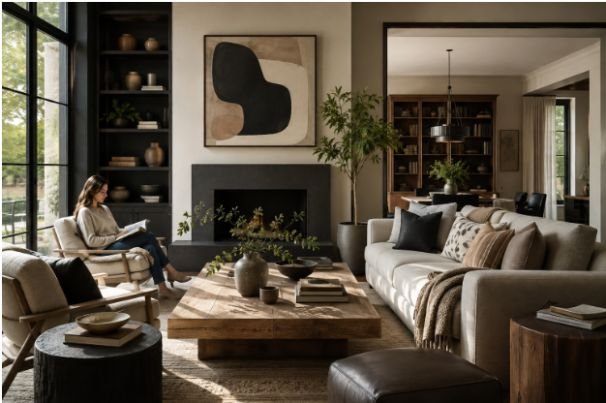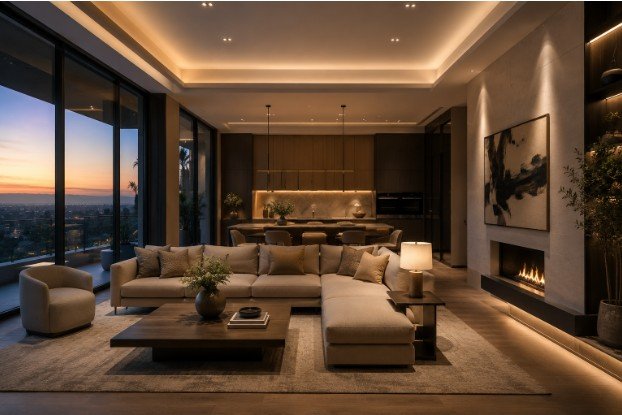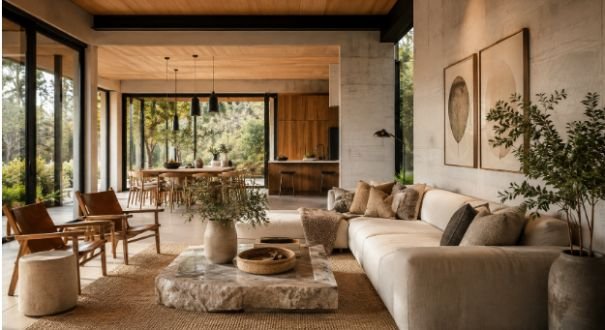
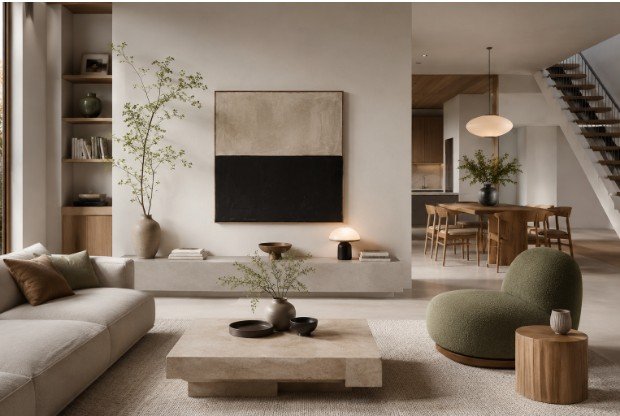
I have always found that the most memorable minimalist rooms are not the ones with the fewest things. They are the ones where every visible choice feels deliberate. A quiet living room with warm wood, a textured chair, and one piece of art can feel far more complete than a perfectly empty space filled with cold white surfaces.
I also noticed that personality becomes even more important when a room follows a restrained aesthetic. Once you remove excess furniture and decoration, the materials, proportions, lighting, and objects you keep become much more noticeable. That is what makes refined minimalist interiors so appealing. They create calm without making a home feel anonymous.
What Makes Minimalism Feel Refined?
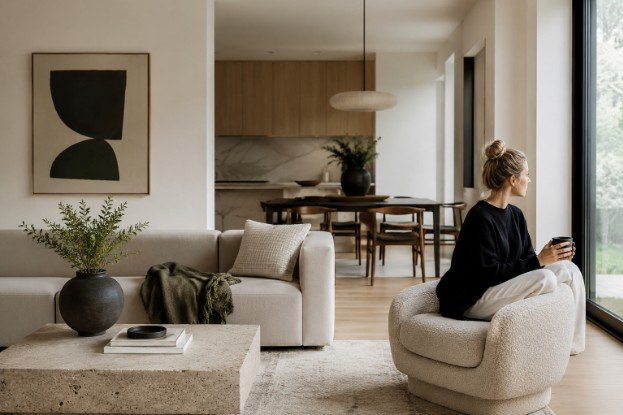
Minimalism works best when it creates clarity rather than emptiness. The goal is not to remove everything until a room looks unfinished. It is to edit the space carefully so that architecture, materials, furniture, and a few personal details have room to breathe.
Refined minimalist interiors usually rely on a restrained palette, clean lines, practical layouts, and high-quality materials. Instead of filling a console with decorative objects, you might place one handmade ceramic piece on it. Instead of using several small artworks, one larger painting can become the visual anchor.
This approach also makes a room easier to live with. There is less visual noise, but there is still enough texture, character, and warmth to make the space feel personal.
Start With Materials, Not More Decor
When a minimalist room feels flat, adding more accessories is rarely the best answer. Start with materials instead.
Natural wood, stone, linen, wool, boucle, clay, and brushed metal can introduce depth without creating visual clutter. A raw timber cabinet against a soft plaster wall feels interesting because the surfaces interact with each other. A wool rug can soften a hard floor. Linen curtains can bring movement to an otherwise structured room.
The trick is to create contrast within a controlled palette. Pair smooth stone with grainy oak, or a polished surface with a rough ceramic object. These small differences give the eye something to explore while keeping the overall room calm.
Layer Texture Into a Restrained Palette
Warm minimalism has become a natural extension of this approach, moving away from stark white rooms toward creams, beige, sand, taupe, and earthy shades. Designers increasingly use texture, organic shapes, and natural materials to make pared-back rooms feel more lived-in.
You do not need five different colors to create depth. Three or four related tones can be enough when their textures vary. Think soft wool against natural timber, woven fabric beside stone, or a boucle chair paired with a smooth wood table.
Let Proportion Do the Visual Work
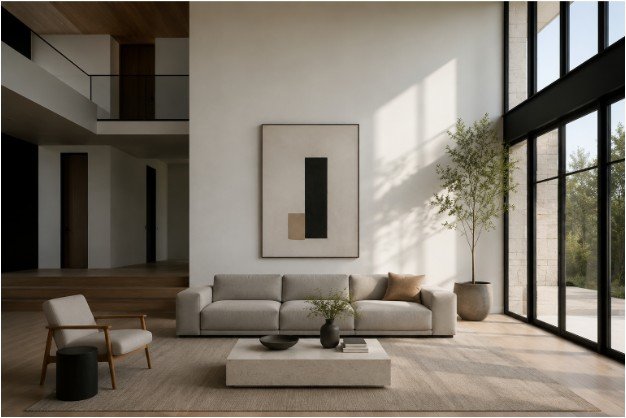
In a minimalist room, proportion matters because there are fewer objects competing for attention.
A large sofa can make a spacious living room feel grounded, while an undersized coffee table may make the arrangement feel disconnected. The same principle applies to artwork, lighting, rugs, and side tables. Their scale should relate to the architecture and to one another.
This is also where empty space becomes useful. A clear section of wall or an uncluttered surface is not wasted space. It gives important pieces breathing room and makes the entire composition feel more intentional.
Rather than asking, “What can I add here?” ask, “Does this space need anything at all?”
Where Modern Luxury Meets Minimalism
There is a natural connection between minimalism and modern luxury interior design because both can place greater value on craftsmanship, material quality, proportion, and restraint than on decoration for its own sake.
Luxury does not have to mean marble everywhere or oversized statement furniture. A beautifully made oak table, hand-finished plaster, natural stone, or custom upholstery can create a stronger sense of quality than a room filled with expensive accessories.
The difference is often in what you choose not to add. When fewer elements remain, craftsmanship becomes easier to appreciate.
Common Mistakes That Make Minimalist Interiors Feel Cold
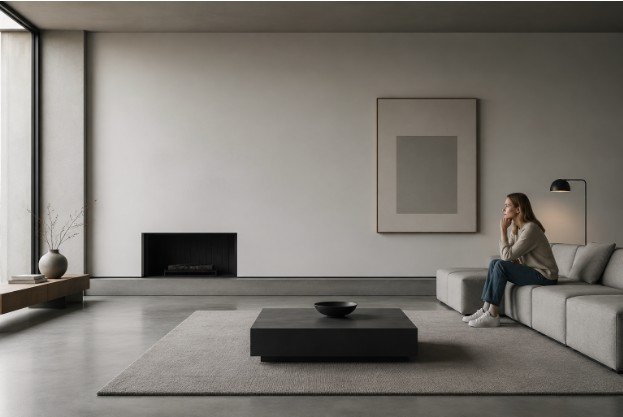
The biggest mistake is treating minimalism as a color scheme instead of a design philosophy. An entirely white room with identical finishes can feel sterile even when it is technically uncluttered.
Another mistake is buying generic decor simply because a surface feels empty. That usually creates the very visual noise the design was supposed to eliminate.
Avoid matching every material and finish too closely, too. Some contrast gives a restrained room character. Finally, do not remove every personal object. A home should still look like someone lives there.
FAQs: How to Create Refined Minimalist Interiors Without Losing Personality
Can minimalist interiors still feel cozy?
Yes. Warm neutrals, layered textiles, natural wood, soft lighting, and organic shapes can make a minimalist room feel comfortable without adding clutter.
How do I add personality to a minimalist home?
Choose a few meaningful objects instead of many decorative pieces. Art, vintage furniture, travel finds, books, and handmade objects can provide character while maintaining visual restraint.
Are warm colors better for refined minimalism?
Warm creams, beige, sand, taupe, and earthy shades often create a softer atmosphere than stark white. You can still use cooler tones when they complement the materials and natural light.
What should I remove first when decluttering?
Start with items that have no function, emotional value, or visual contribution. Clearing unnecessary surface decor is often an easy way to make a room feel calmer.
Why Restraint Can Make a Home Feel More Personal
The beauty of refined minimalism is that it leaves enough space for the things that actually matter. When unnecessary decoration falls away, a room’s materials, architecture, artwork, and personal history become easier to notice. That can make a home feel considered without making it feel staged.
A minimalist home does not need to be empty to be elegant. Sometimes the most personal room is simply the one that knows when to stop.